
HOW I CREATE
Design Process
It begins with understanding the atmosphere of the place. Its intended emotional impact and the way it is meant to be experienced by people.
The process unfolds through eight successive layers, moving from the initial sensory impression, through light, materials, art, and scent, until all elements converge into a cohesive, fully integrated whole..
01 For the body, senses, and nervous system
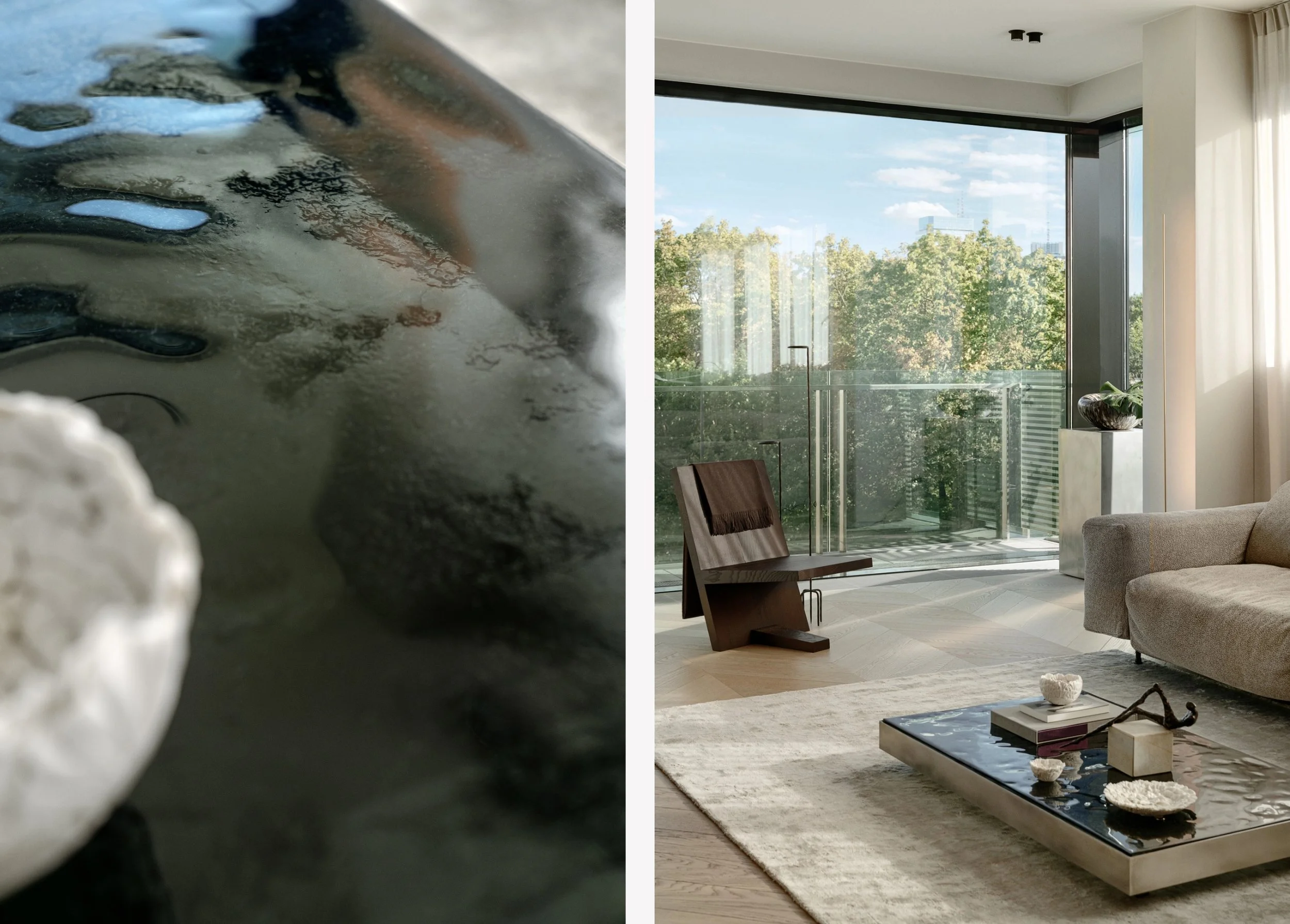
Design focused on human experience
Every design decision shapes how a person experiences a place.
I create spaces that support regeneration, a sense of safety, and overall wellbeing, combining design practice with an understanding of how the environment affects the body, the senses, and the nervous system.
02 Foundation
Clarity of form
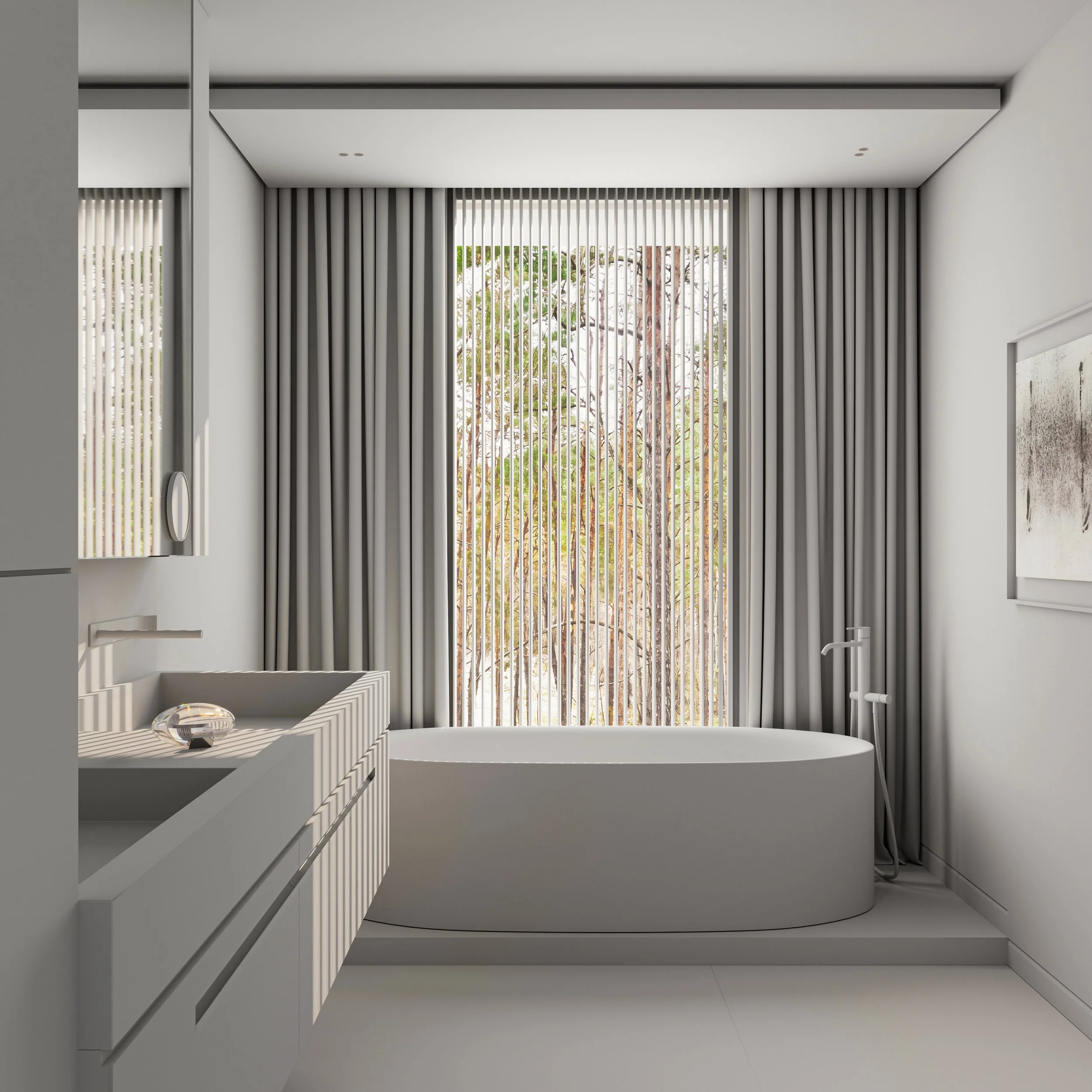
A monochrome spatial study focused on proportion, light, and composition.
A deliberate removal of materiality, texture, and colour allows attention to shift away from visual distraction and toward the pure reading of space. Its rhythm, depth, and relationship with natural light, art and greenery outside the window.
This stage establishes the spatial logic that becomes the basis for all subsequent material decisions, where physical textures and finishes are introduced only after the form has been fully resolved.
03 Material as language
Materials, textures, and colour
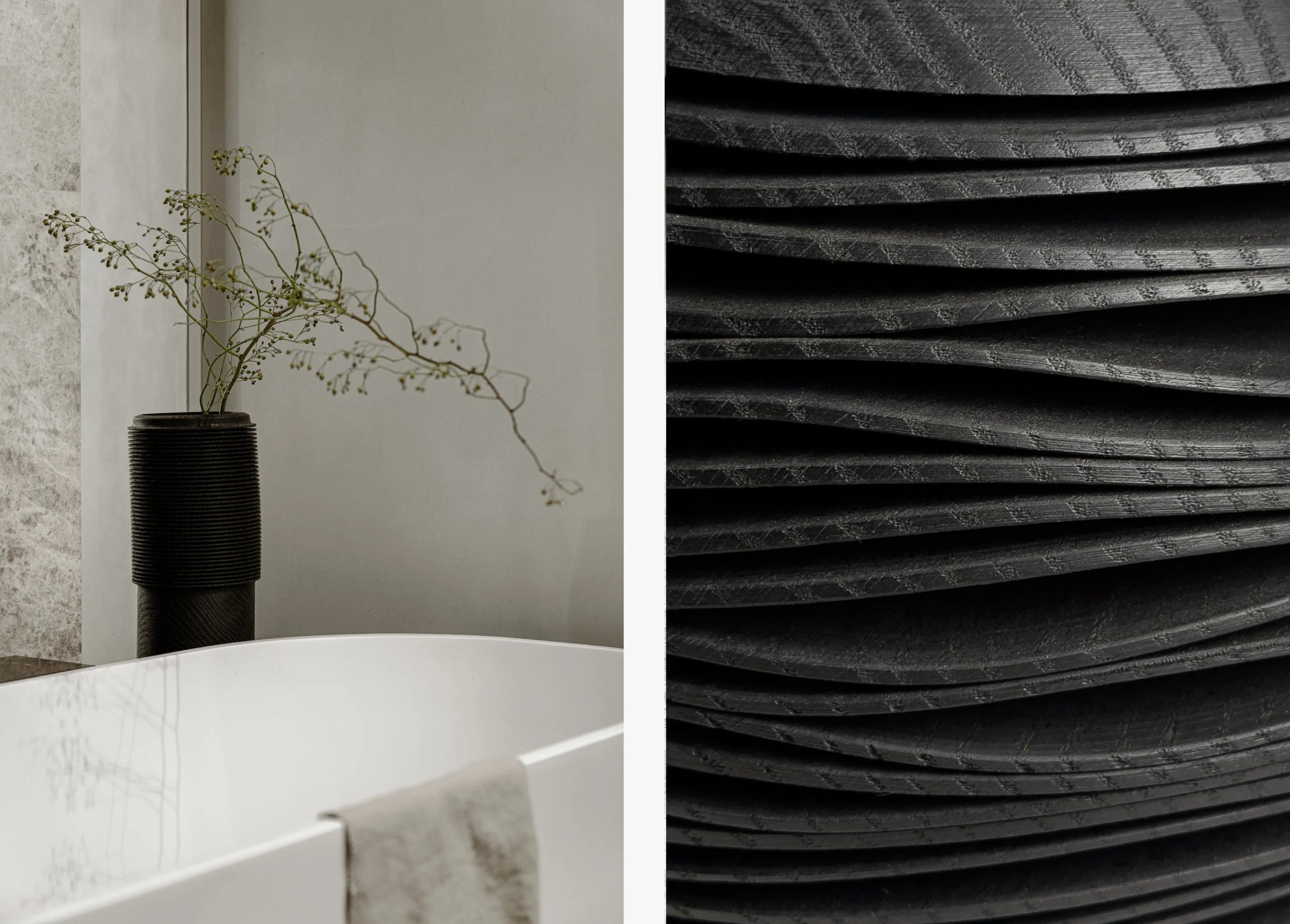
The materials I select engage both visually and through touch. Their subtlety is defined by texture, depth, and the way they respond to light and time.
They are supported by a nature-inspired palette: whites, beiges, greys, taupe, and browns, occasionally interrupted by deep black or more expressive colour accents.
Every decision is directed toward creating spaces that support wellbeing, calm, and a sense of harmony. Materials are not treated as decoration. They are an integral part of the spatial experience, reflecting the diversity of nature and the beauty revealed through attentive observation.
04 Art selection
Art and craftsmanship
The selection of art, craft, and objects is guided by their ability to strengthen the identity of the space.
I collaborate with artists, artisans, and makers whose work strengthens the identity of the place and contributes to its distinct narrative.
This creates a coherent relationship between architecture, interiors, art, and user experience.
Art and craft are not treated as additions. They are an integral component of the whole.
05 Shaping spatial atmosphere
Light
Light is one of the key elements shaping how space is perceived. It influences user comfort, orientation, mood, and the reading of materials, colours, and spatial proportions.
Each lighting strategy is developed individually for a specific project, taking into account its function, context, and intended user experience.
Lighting is not purely a technical layer. It defines atmosphere, supports the character of the space, and reinforces the core design intent.
06 The invisible layer
Scent
Scent is one of the strongest carriers of memory and emotion. It shapes how a space is perceived, builds associations and reinforces its character and recognisability.
Scent design is treated with the same level of consideration as materials, light, or art. I draw on Japanese Kōdō and the tradition of “listening to incense,” introducing scent as an integral layer of spatial experience.
When carefully composed, scent supports the atmosphere of a place, enhances presence, and leaves a lasting imprint in bodily memory.
07 Atmosphere
Light scenes
The quality of a space is not defined solely by its appearance. What matters is the human experience and how the space is perceived, how one moves through it, and how long one chooses to remain within it.
At this stage, the atmosphere is shaped through light, supporting comfort, regeneration, and a positive spatial experience.
08 The final layer
Colour
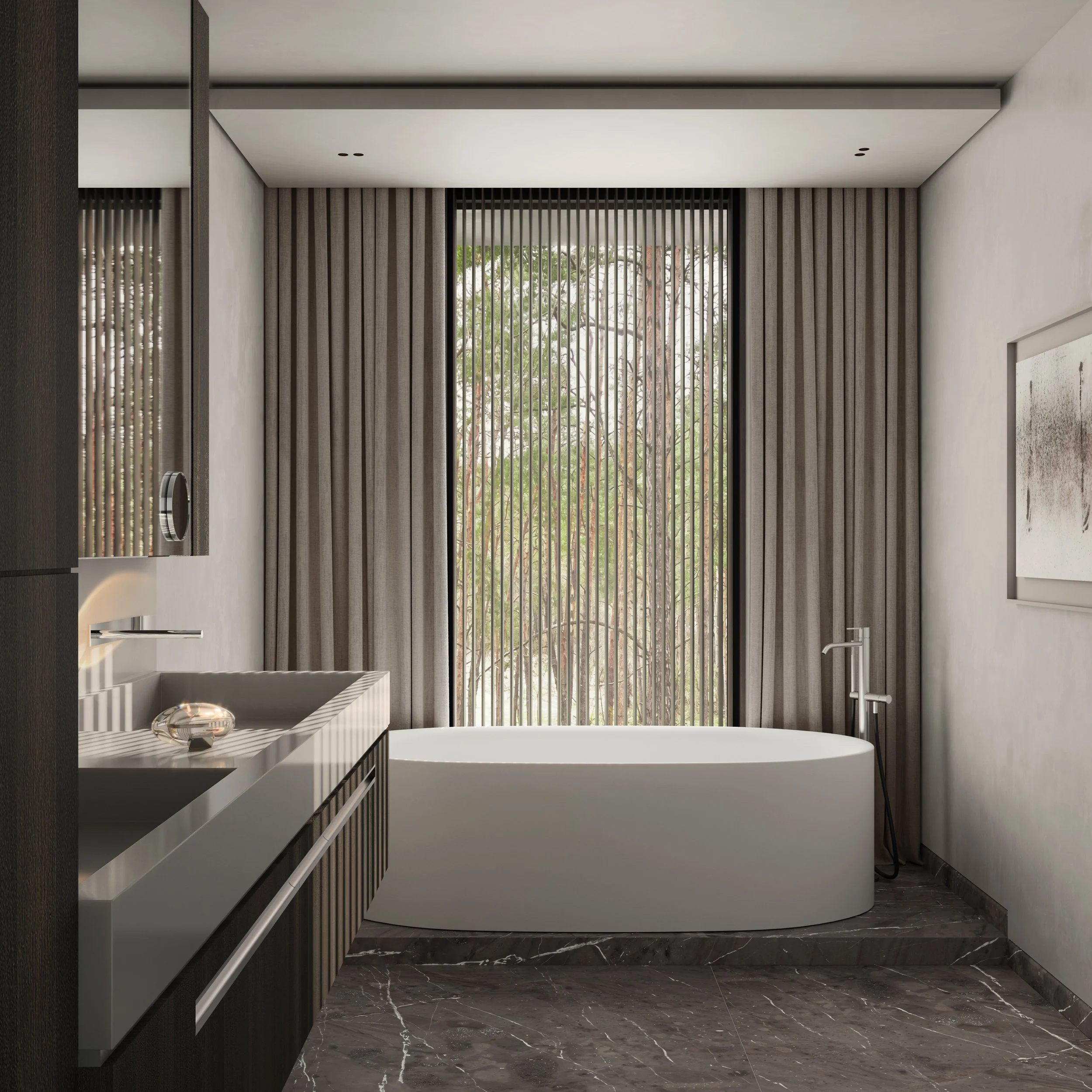
Colour is the final element of the process. It is introduced only once the space has been fully defined and all design decisions form a coherent whole.
As a result, the project is not based solely on visual impact, but on a consciously constructed user experience.