
Beauty as home
More and more, it becomes clear that beauty is not merely a visual category, nor a matter of taste. It is something we perceive first through the body, a physiological response rather than an intellectual one. Beauty softens us. It regulates the nervous system. It allows breath to deepen.
In this sense, beauty is less about form and more about rhythm.
The first language of the body
Before language, before identity, we learn the world through touch, warmth, breath and closeness. These early bodily impressions seem to remain with us. Perhaps this is why so many people describe oceans, sky, light or movement of water when asked to imagine a beautiful place. These experiences are not “decorative”, they are regulatory. They echo the primal rhythm of being held, rocked, supported.
Beauty, then, is a state in which the body feels safe enough to rest.
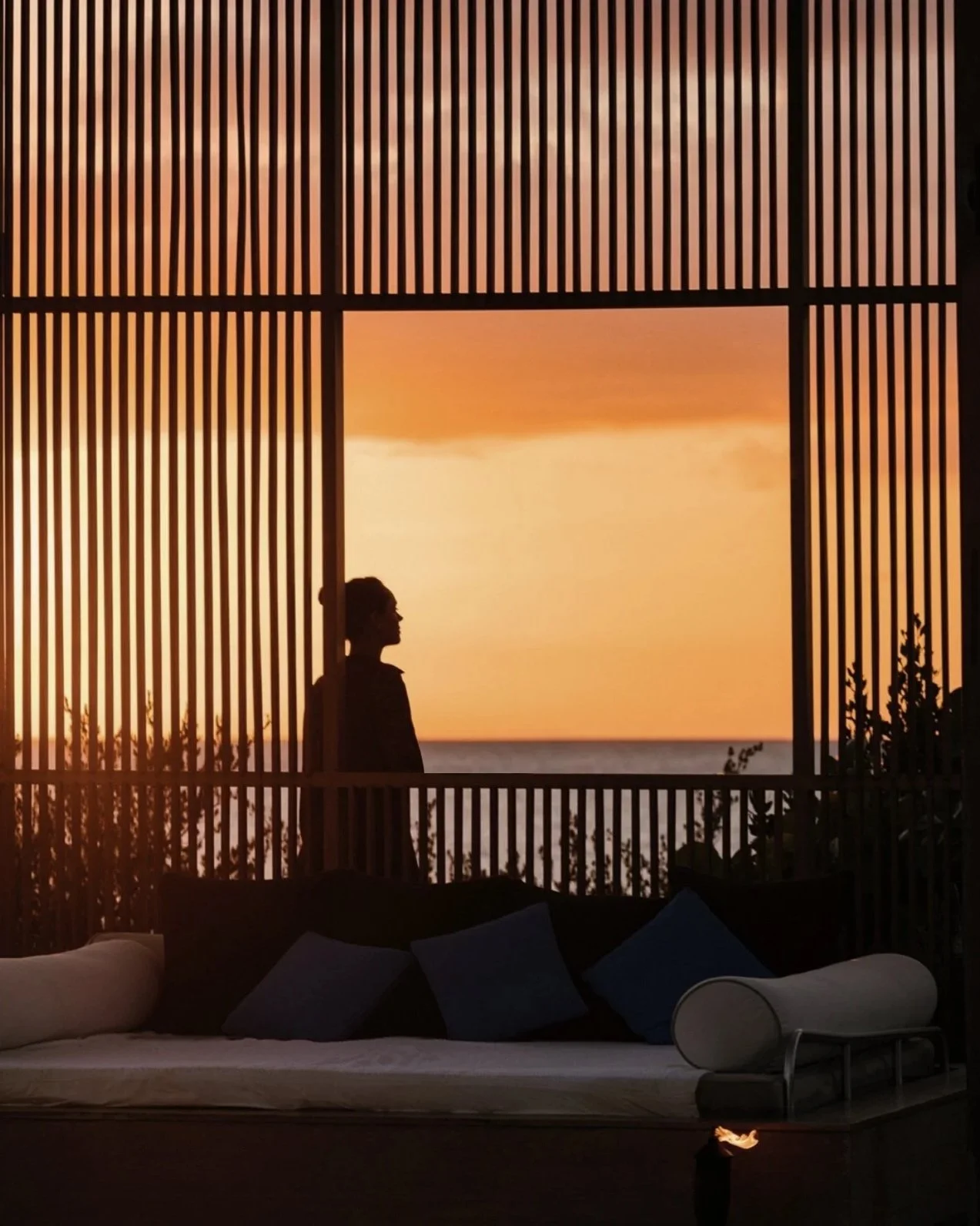
Space as a nervous system
And this changes how we think about space and design.
It suggests that architecture and interiors are not neutral containers for life but direct participants in it. A space either supports the nervous system, or it doesn’t. It either offers rhythm and coherence, or it unsettles. It either allows the body to arrive — or keeps it slightly on guard.
This perspective shifts attention away from style, status and surface, toward something quieter and more fundamental:
Does this place allow the body to soften? Does it create a sense of gentle continuity? Is there room for breath?
The aesthetics of regulation
The aesthetics of beauty may simply be the aesthetics of regulation.
Which helps explain why some environments, even visually impressive ones can still feel subtly wrong. And why a simple, honest, uncluttered space can evoke a sense of belonging far beyond its material composition.
Beauty becomes less about accumulation and more about truthfulness. Less about perfection and more about coherence. Less about the spectacular and more about what feels like home to the nervous system.
To restore rhytm
Perhaps the role of design is not to decorate life but to listen to it. To create environments where the pulse slows, the breath deepens, and tenderness becomes possible again. Where nothing shouts and everything holds. Where the body knows it may rest.

A quiet definition
Beauty, in its deepest sense, is not an object.
It is a condition.
A moment in which the body recognises itself
as safe, held, and quietly
Alive.
Words by Ines Lulkowska
Photography courtesy of Amanyara Resort
