
What is grounding through structure
The nervous system is constantly checking: am I stable? Am I going to fall? Verticality is directly connected to gravity, the spine, bodily balance, and spatial orientation. That is why vertical structures provide a reference point. They organize space around an axis and reduce uncertainty.
The vertical acts like a frame, pillars, the “arms” of a space, something to lean on. It regulates through stabilization and a sense of support, in the manner of a steady, regulating presence.
Horizontality, by contrast, is about calm, diffusion, and “being carried.” It operates in a completely different way. It is linked to the horizon, the line of the earth, the surface of water, lying down, rest, and the breath, which itself moves in waves. That is why horizontal structures expand perception, lower tension, and slow down visual scanning.
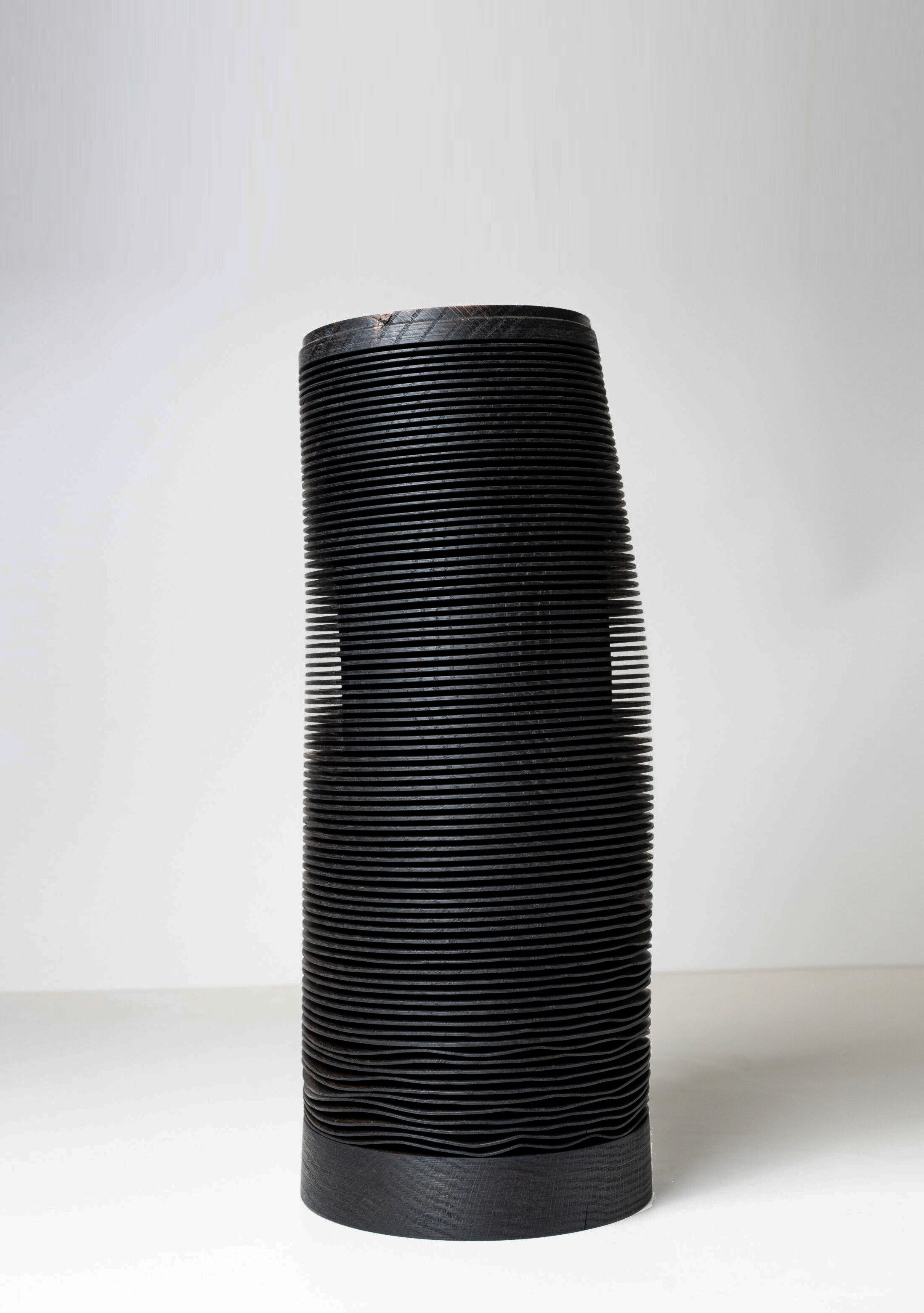
Being held and carried at once
Take a look at the form of this sculpture once again. It has a vertical structure that symbolizes an axis and stability, while at the same time being composed of horizontal, rhythmic layers. like waves.
The reference to the ocean here is very precise, because waves embody rhythm, predictability, and repetition. In that sense, they also echo the original regulating relationship from prenatal, infant, and early childhood experience.
This is regulation through calming, the dispersion of tension, and softness.
The vertical provides a structure that holds, like a stable presence you can lean into. The horizontal offers a field that carries, like a presence in which you can let go and simply be.
Both share a common denominator: they are spatial counterparts of regulating relationship.
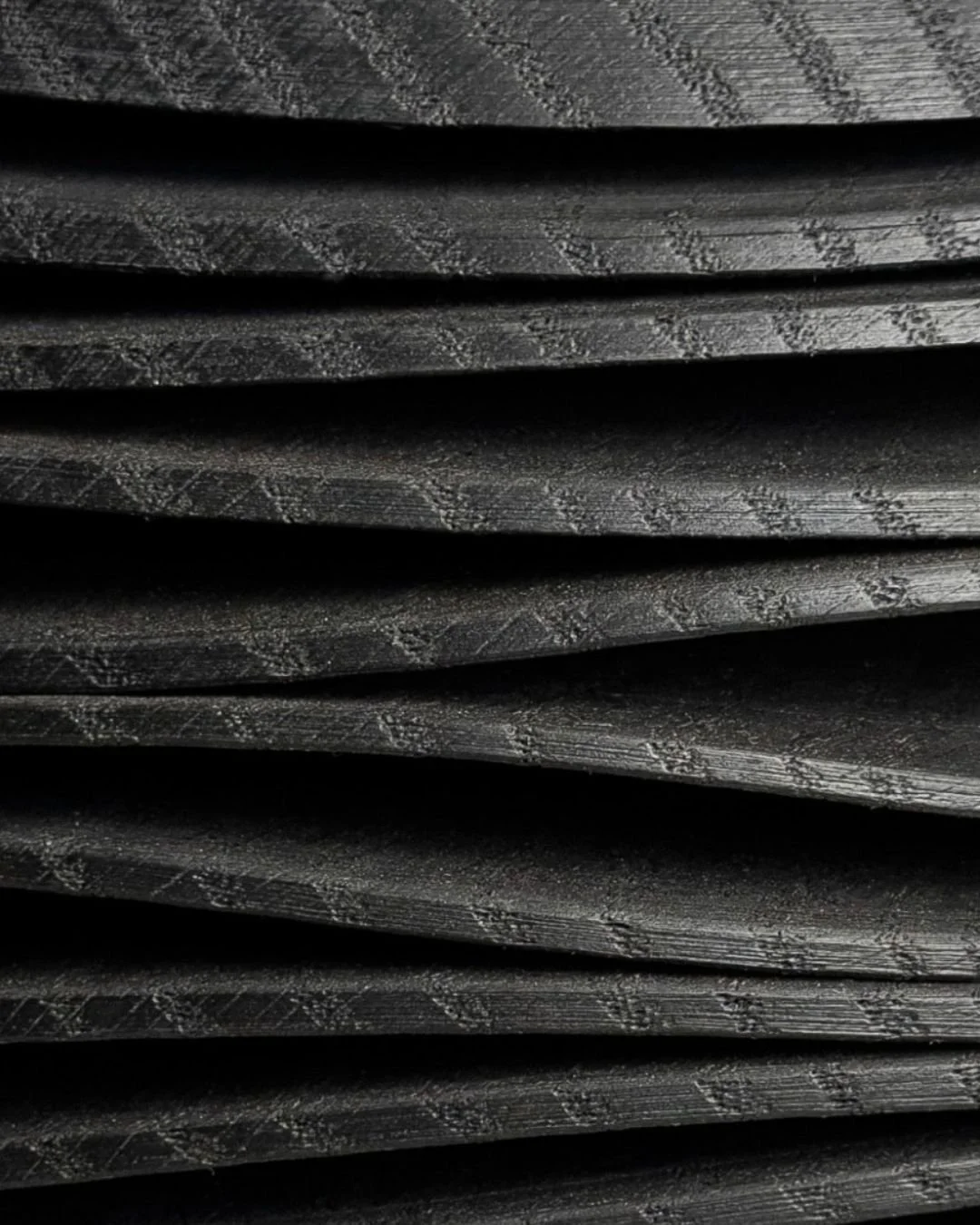
Intuitive knowledge
This is something artists and designers have done intuitively for centuries, combining vertical and horizontal to regulate the body,
without even naming it.
Words by Ines Lulkowska
Photography courtesy of Maciej Gąsienica GIEWONT
